Vintage Floral Digital Papers: Timeless Beauty Meets Modern Creative Flexibility
Imagine opening a digital design toolkit and finding delicate white blossoms winding across rich, dark backgrounds—or soft botanical motifs that repeat flawlessly, edge to edge, like heirloom wallpaper from a sunlit cottage. That’s the magic of vintage floral pattern digital papers: not just pretty pictures, but versatile, high-resolution, seamless design assets built for real-world creativity. Whether you’re handcrafting wedding invitations, launching a print-on-demand shop, or designing planner stickers for Etsy, these patterns bridge nostalgia and functionality in one elegant download.
What Exactly Is a Seamless Vintage Floral Pattern?
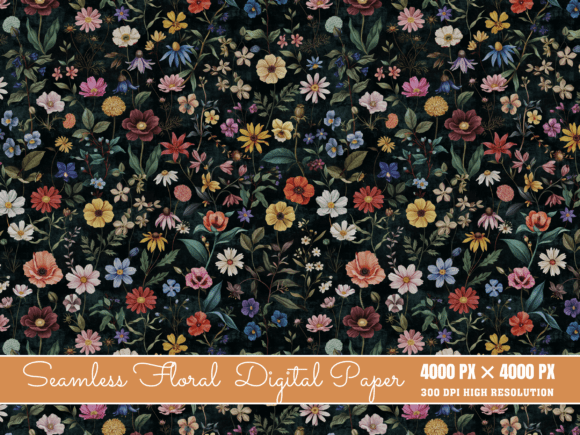
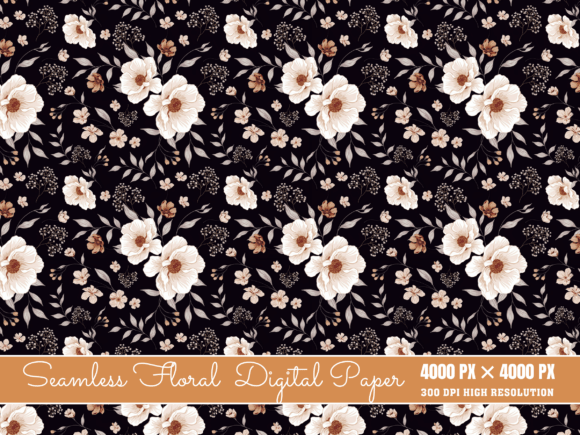
A seamless vintage floral pattern is a digitally crafted design where botanical elements—roses, peonies, ivy, ferns, or daisies—are arranged so the top seamlessly connects to the bottom, and the left edge matches the right. When tiled across a surface (like a tumbler wrap or fabric swatch), there are no visible seams, gaps, or awkward repeats. Unlike a single floral illustration, a seamless pattern is engineered for infinite repetition without visual disruption.
The “vintage” aspect refers to stylistic choices rooted in historical aesthetics: muted palettes (think sage, sepia, cream, charcoal), hand-drawn linework, subtle texture overlays, and asymmetrical yet balanced compositions. It’s not about copying 19th-century engravings—it’s about evoking warmth, authenticity, and quiet elegance through intentional design language.
Why “White Flower on Dark Background” Stands Out
Among popular variations, the white flower digital paper with dark floral background offers striking contrast and exceptional versatility. A crisp ivory bloom against deep navy, charcoal, or forest green creates instant visual hierarchy—ideal for text overlays on greeting cards or minimalist branding. Because the light motif pops clearly, it works beautifully for sublimation printing on black mugs or dark apparel, where lighter designs often fade or get lost.
This contrast also supports accessibility: text remains highly legible, and digital planners benefit from reduced eye strain when layered with light-colored fonts or icons.
How These Patterns Fit Into Real Creative Workflows
These aren’t just “nice-to-have” decor files—they solve practical problems across industries and hobbies:
- Scrapbooking & Paper Crafts: Print onto premium cardstock for custom photo mats, journal covers, or layered tags—no more hunting for physical paper packs that run out mid-project.
- Greeting Cards & Invitations: Use the seamless repeat to create elegant borders, full-bleed backgrounds, or envelope liners—all while maintaining consistent scale and alignment.
- Print-on-Demand (POD) Businesses: Upload directly to platforms like Printful or Redbubble. The 300 DPI resolution ensures sharpness on everything from tote bags to wall art—even at large print sizes.
- Sublimation Crafting: Because these are high-res JPG files optimized for color fidelity and edge alignment, they transfer cleanly onto ceramic mugs, phone cases, and polyester fabrics without pixelation or seam lines.
- Digital Planners & Stationery: Import into GoodNotes, Notion, or Canva to build themed weekly spreads, habit trackers, or printable checklists—with cohesive, calming visuals that support focus and intentionality.
Commercial Use: Why It Matters (and What It Really Means)
Many free floral patterns come with restrictive licenses—banning resale, limiting impressions, or prohibiting use in POD products. This collection explicitly grants commercial use rights, meaning you can legally:
- Sell physical items (e.g., notebooks, fabric by the yard) featuring the pattern;
- License digital products (e.g., Canva templates, printable planners) that incorporate the design;
- Use it in client work (e.g., designing a boutique’s holiday packaging);
- Create and sell sublimated merchandise via third-party fulfillment services.
Important clarification: Commercial use does not mean you may resell the JPG file itself as a standalone digital product (“digital paper pack”) unless permitted by the original creator. Always review the included license—this collection allows derivative use, not redistribution of raw assets.
Technical Quality: Why 300 DPI + Seamless Repeat Is Non-Negotiable
You might wonder: “Can’t I just zoom in on any floral image and call it good?” Not quite. Here’s why technical specs matter:
- 300 DPI (dots per inch): This is the industry standard for professional print output. At lower resolutions (e.g., 72 DPI—the web standard), images appear blurry or jagged when printed larger than a business card. With 300 DPI, your 8.5" × 11" printable paper looks crisp, and your 24" × 36" canvas poster retains fine petal details.
- Seamless Repeat Engineering: True seamlessness requires precise cloning, offset testing, and manual refinement—not just auto-tiling in Photoshop. Poorly constructed repeats show misaligned stems or duplicated leaves, breaking immersion. These patterns undergo real-world tiling validation before release.
- JPG Format Benefits: Universally compatible, lightweight for fast downloads, and preserves rich color depth without transparency complications (which PNGs introduce—unnecessary for most background uses).
Debunking Common Misconceptions
Misconception #1: “Vintage = outdated.”
Not at all. Vintage-inspired design taps into enduring human preferences for organic forms, gentle asymmetry, and tactile warmth—qualities proven to increase engagement in branding and UX design. Think of brands like Anthropologie or Rifle Paper Co.: their success lies in marrying heritage aesthetics with modern usability.
Misconception #2: “Seamless means ‘generic.’”
Quite the opposite. A well-designed seamless pattern tells a story—note how the climbing jasmine in this collection curves gently upward, mimicking natural growth, or how scattered eucalyptus sprigs vary subtly in size and rotation. That’s intentional artistry, not algorithmic filler.
Misconception #3: “Digital papers are only for designers.”
Wrong. Teachers use them to create themed classroom handouts. Wedding couples DIY their own programs and place cards. Small-batch candle makers wrap jars with custom-printed labels. You don’t need Adobe Illustrator—you can drag-and-drop these JPGs into Canva, Microsoft Word, or even Cricut Design Space.
Getting Started: Simple Ways to Use Your Digital Paper Today
No design degree required. Try these beginner-friendly ideas:
- In Canva: Upload the JPG, set it as a “background,” then layer text boxes or icons on top. Adjust transparency for a watercolor-like effect.
- For Sublimation: Open in Photoshop or GIMP, resize to match your blank item’s dimensions (e.g., 8" × 10" for a coaster), and mirror horizontally before printing.
- As Printable Art: Print on matte photo paper at home, trim, and frame—no framing skills needed. The dark background adds instant sophistication to any shelf or desk.
- In Procreate: Import as a new layer, reduce opacity to 20%, and sketch over it for hand-lettered quotes or botanical doodles.
With instant digital download, there’s zero shipping delay—just open, apply, and create. And because each pattern is crafted for both personal joy and professional rigor, you invest once and return to it again and again: for next year’s holiday cards, your next Etsy launch, or simply the quiet satisfaction of making something beautiful, by hand or by screen.
Whether you're rediscovering the joy of analog crafting or scaling a creative business, vintage floral digital papers offer more than decoration—they’re quiet collaborators in a world that moves too fast. They invite slowness, intention, and timeless beauty—pixel by pixel, petal by petal.