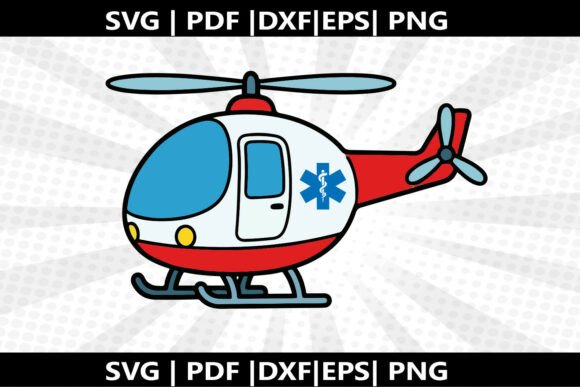
Ambulance SVG Cricut Cut File: Precision Design for Purpose-Driven Crafters
Whether you’re crafting custom apparel for a local EMS fundraiser, designing heartfelt thank-you gifts for first responders, or personalizing gear for a youth paramedic camp, an Ambulance SVG Cricut Cut File bridges intention and execution with quiet efficiency. It’s not just another vector graphic—it’s a purpose-built digital asset engineered for clarity, versatility, and real-world usability across cutting, printing, and crafting workflows.
Why This Design Fits Modern Creative Needs—Not Just Trends
Crafting today is less about hobbyist nostalgia and more about meaningful expression, community connection, and micro-entrepreneurship. People aren’t buying cut files to fill shelves—they’re using them to tell stories, support causes, and build identity. An ambulance motif resonates deeply in contexts where care, readiness, and service matter: school nurse appreciation weeks, EMT graduation ceremonies, hospital volunteer groups, or even pet-first-aid kits for animal lovers. Unlike generic icons, this design balances recognizability with stylistic restraint—clean lines, balanced proportions, and intentional negative space—so it scales from a 1-inch iron-on on a child’s backpack to a 24-inch wall decal in a clinic waiting room.
This shift reflects broader changes in how people engage with making: faster iteration cycles, demand for multi-platform compatibility (Cricut users shouldn’t be locked out of Silhouette or Glowforge workflows), and expectation of plug-and-play reliability. No one has time to troubleshoot jagged nodes or misaligned compound paths. That’s why the Ambulance SVG Cricut Cut File delivers optimized vectors—not just raw outlines—but thoughtfully constructed geometry that cuts cleanly on entry-level machines and holds fidelity in professional print environments.
More Than a File: A Workflow Enabler Across Devices and Disciplines
The included formats aren’t a checklist—they’re strategic options aligned with actual use cases. The SVG file integrates natively into Cricut Design Space with layered color grouping, making it simple to assign different materials (e.g., glitter vinyl for the body, matte black for the cross). DXF support means educators using Silhouette Studio Basic Edition can import it directly for classroom projects—no upgrade required. EPS ensures compatibility with legacy Adobe Illustrator setups still used by small print shops. And the 300dpi PNG with transparent background isn’t just “for stickers”—it’s calibrated for sublimation on ceramic mugs used by fire department gift shops or embroidered patches ordered through online services that accept raster inputs.
This flexibility matters because creators rarely work in silos anymore. A band mom might start with a t-shirt design for her daughter’s marching band medical team, then adapt the same ambulance icon into a vinyl decal for a water bottle handed out at a parade, and finally resize it for a PDF invitation to a community CPR workshop. The file doesn’t force her into one tool or one output—it follows her where she needs to go.
Practical Use Cases That Go Beyond the Obvious
While t-shirts and tote bags are natural starting points, the most thoughtful applications emerge when crafters lean into context:
- Home safety kits: Apply the ambulance icon to laminated instruction cards tucked inside emergency preparedness bins—using the PDF version for crisp home printing.
- Educational tools: Teachers print the SVG as a manipulative for elementary health units, cutting it from magnetic sheeting to label classroom first-aid stations.
- Small business branding: A mobile pet wellness service uses the scalable vector to create consistent signage—on vehicle wraps (via EPS), social media banners (PNG), and embroidered uniforms (SVG with stitch-ready simplification).
- Personalized keepsakes: A parent commemorates their child’s first EMT certification with a laser-cut wood ornament—the DXF format feeds cleanly into Glowforge, preserving fine detail in the cross and siren line.
What ties these examples together isn’t novelty—it’s utility rooted in consistency. The same core design works across tactile, digital, and environmental touchpoints without visual compromise.
Design Integrity You Can Trust—No Guesswork Required
“User-friendly weeding” isn’t marketing speak—it’s measurable. Inside the file, interior cut lines are precisely offset, letterforms avoid fragile serifs, and overlapping elements are boolean-merged to prevent accidental separation during weeding. Nodes are minimized without sacrificing contour accuracy, so machines like the Cricut Maker 3 or Brother ScanNCut detect edges confidently—even at 0.5-inch sizes. And because it’s built in true vector format, resizing introduces no pixelation, aliasing, or distortion. You’re not adapting a logo—you’re deploying a tool calibrated for performance.
Who Benefits—and How They Actually Use It
This file serves intersecting audiences with distinct but overlapping needs:
- Band moms and booster organizers appreciate the ability to batch-cut dozens of matching hoodies for student medical teams—without needing design expertise.
- Baseball fans running concession stands at local tournaments add ambulance-themed rally towels or stadium cups to their vendor lineup—leveraging the PNG for quick DTG printing.
- Animal lovers coordinating pet first-aid workshops use the SVG to create durable vinyl decals for kennel crates or reusable training mats—scaling the icon to fit curved surfaces without losing legibility.
- Freelance designers building client portfolios embed the vector into mockups for healthcare nonprofits, knowing it renders consistently across Figma, Adobe XD, and physical proofs.
No group is “targeted” in a reductive way—the file supports their goals because it was built with constraints in mind: material behavior, machine tolerance, human readability at varying distances, and ethical representation of emergency services.
Instant Access Meets Real-World Readiness
There’s no learning curve baked into the download. Once unzipped, folders are clearly labeled by format—not by software version or assumed skill level. Each file includes a brief README with recommended settings (e.g., “Use ‘Vinyl’ material setting at 0.3mm blade depth for standard Cricut Explore Air 2”) and notes on layer organization. That kind of documentation signals respect for the user’s time and context—not just their purchase.
In an era where digital fatigue is real, this level of operational clarity stands out. You’re not downloading a concept—you’re acquiring a working component for your next project, ready to align with your existing tools, timeline, and standards.
Final Thought: Tools Should Serve Meaning, Not Define It
An Ambulance SVG Cricut Cut File doesn’t make your message—it amplifies it. Whether you’re expressing gratitude, educating others, or building community around shared values, the strength of your idea shouldn’t be limited by technical friction. This file removes barriers, not possibilities. It lets you focus on why you’re creating—not how to make the software cooperate. And in today’s landscape, where authenticity and intention drive engagement more than polish alone, that distinction makes all the difference.